
Industry Challenge
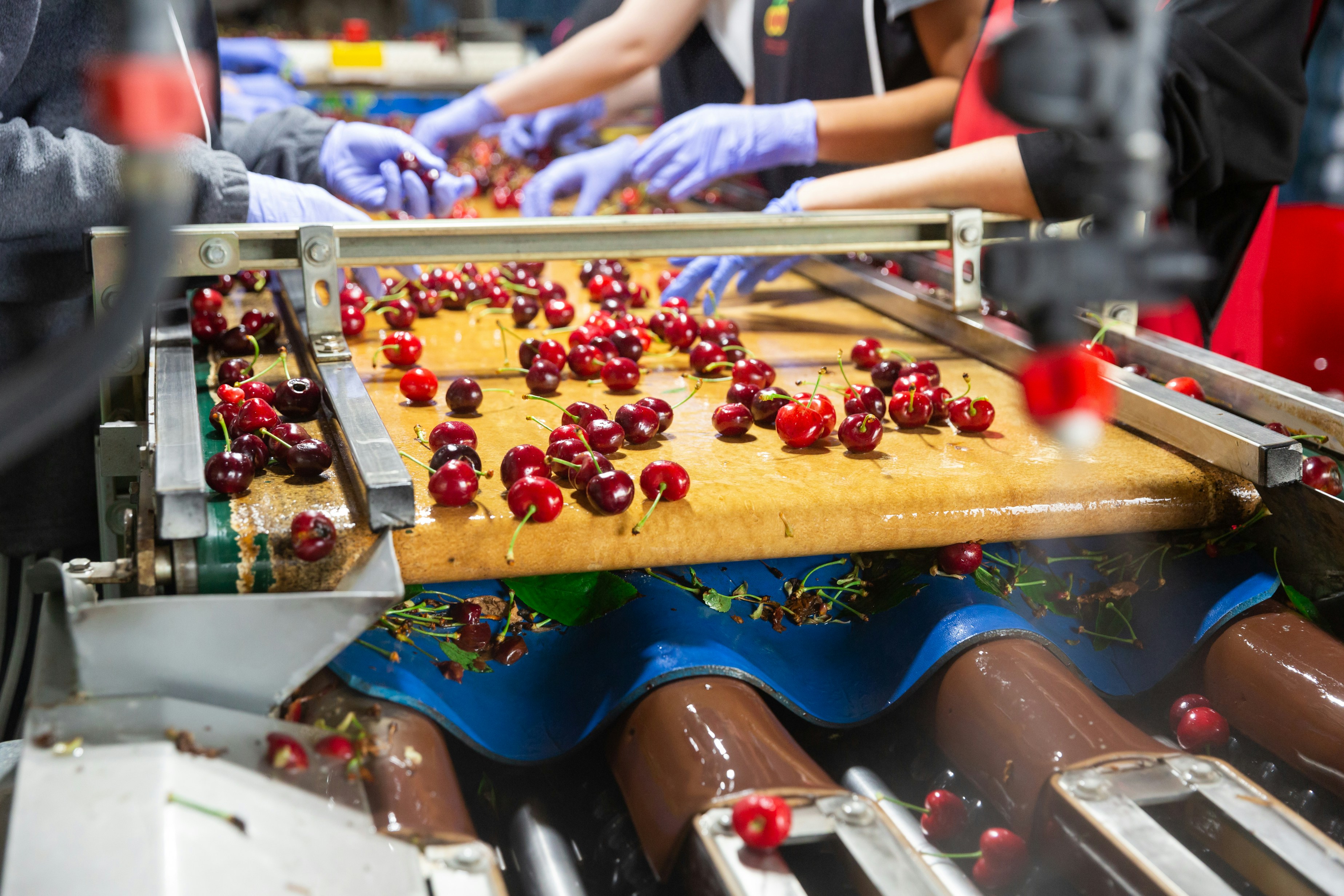
Post-harvest processing relies on manual labor for grading, sorting, and packing — work that is seasonal, inconsistent across shifts, and increasingly hard to staff. Produce must be classified by size, color, and ripeness at harvest volumes without bruising, which reduces shelf life and downgrades saleable quality.
AI-based vision systems can outperform human graders in speed and consistency, but only if the robotic handling is gentle enough to match — a fast robot that bruises fruit is worse than a slow human who doesn’t.
Manual vs. Automated: Industry Benchmarks
| Metric | Manual Baseline | With Robotic Automation |
|---|---|---|
| Throughput | ~300 units/hr (fruit sorting) | 780+ units/hr with cobot-assisted sorting; up to 100 fruits/second on high-speed optical lines |
| Classification accuracy | Human visual inspection, shift-inconsistent | 85–90% optical sorting; <1.2% classification error with vision-guided robotics |
| Product damage | Higher from manual handling | 0.3% physical damage rate |
| Typical payback | — | ~12 months |
Sources: Interact Analysis, GREEFA, agricultural research journals.