
Industry Challenge
Automotive sub-assembly demands repeatable force-controlled insertion — press-fits, snap-fits, gaskets — at micron-level accuracy with full traceability per part. IATF 16949 mandates statistical process control and documented force curves for every critical operation.
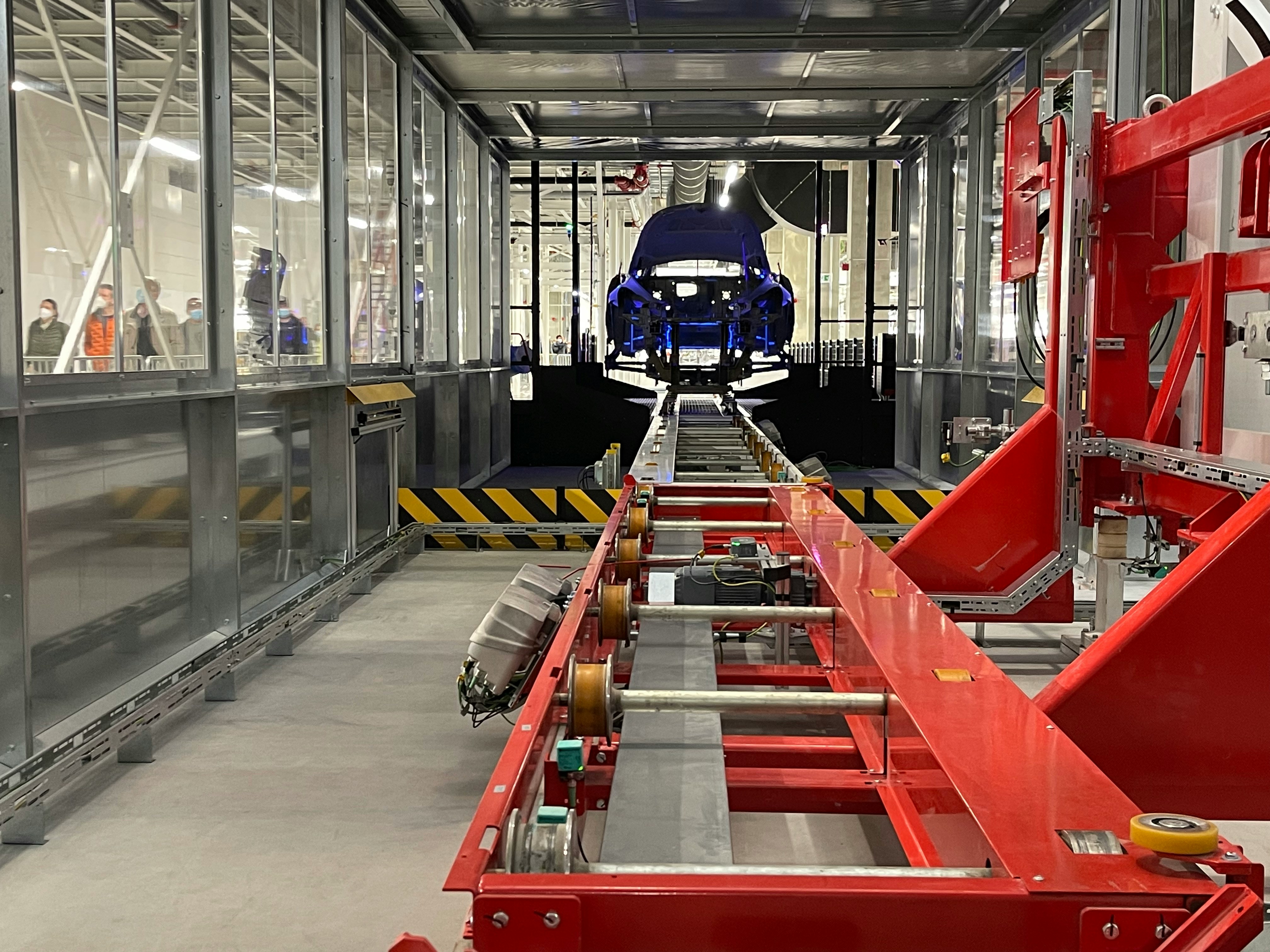
Multi-station cells with conveyors, servo presses, feeders, and robots must synchronize with deterministic timing. A missed cycle or phase error causes cascading line stoppages that cost thousands per minute.
Manual vs. Automated: Industry Benchmarks
| Metric | Manual Baseline | With Robotic Automation |
|---|---|---|
| Productivity | Baseline manual rates vary by task | 30–50% improvement |
| Labor cost | Fully burdened cost at 1.3–1.6x base wage | 22–28% reduction in first year |
| Typical payback | — | 1.3 years average (McKinsey 2024), down from 5.3 years in 2019 |
| Industry scale | — | Automotive operates ~1/3 of all industrial robots globally |
Sources: McKinsey, BCG, Oxford Economics, IFR World Robotics 2024.
IATF 16949 Compliance Architecture
IATF 16949 certification applies to automotive OEMs and tiered suppliers — not to equipment vendors directly. However, the standard’s requirements for process control, measurement system analysis, traceability, and SPC create hard expectations for what production equipment must enable. Adeeb’s architecture provides the data infrastructure layer that automotive customers need.
What Adeeb Products Provide
| IATF 16949 Requirement | Adeeb Capability |
|---|---|
| Measurement System Analysis (7.1.5.1.1) | Delta Robot’s ±0.05mm repeatability provides a quantifiable, stable baseline for Gage R&R studies. Force-torque sensor integration enables force-curve data collection for MSA. |
| Control Plan (8.5.1.1) | Robot Controller’s Python API exposes real-time process parameters — position, force, velocity, cycle time — for integration into customer control plans. |
| Traceability (8.5.2) | Controller logs per-cycle force curves, timestamps, and positional data. EtherCAT Master’s distributed clock sync provides deterministic, time-stamped event sequencing across the cell. |
| SPC / Process Capability (9.1.1.1) | Deterministic motion control and force-torque data enable Cpk/Ppk calculation on press-fit force and positional accuracy. Python API allows export to SPC software. |
| Change Management (8.5.6.1) | Controller software versioning and parameterized recipes allow auditable change tracking with full revision history. |
| Error-Proofing (8.3.5.2) | Force-torque feedback enables pass/fail thresholds on press-fit operations — automatic abort if force curve deviates from the acceptance envelope. |
Shared Responsibility
Adeeb provides the sensing, control, and data export capabilities. The OEM or Tier 1 supplier is responsible for MSA study execution, SPC charting, control plan authorship, traceability database integration, and maintaining the IATF 16949 certification. The system is designed to make compliance straightforward rather than requiring custom instrumentation.